If you've lived in the Denver metro for more than a year or two, you already know the feeling: dark clouds build over the mountains in the afternoon, the air shifts, and before you can pull into a garage, the hail starts. What many drivers don't fully appreciate is that this isn't bad luck; it's geography, and it's getting harder to ignore.
Hail damage repair has become a growing concern for Denver, CO car owners, and the numbers behind Colorado's worsening storm seasons make it clear why. Denver sits squarely in "Hail Alley," a corridor stretching from Texas to South Dakota where warm Gulf air collides with cold Rocky Mountain drafts, creating near-perfect conditions for large, fast-forming hailstorms.
Colorado consistently ranks among the most hail-damaged states in the country, and the Denver metro sits at the center of it. Understanding what that means for your vehicle is the first step toward protecting one of your most valuable assets.
Why Denver's Hail Season Is Getting More Severe
Denver's hail season runs from mid-April through mid-September, with activity peaking between May and August, and June consistently proving the most destructive month of the year.
The numbers tell a clear story. Colorado averages around 94 hail events annually and carries the highest per-capita hail loss in the United States at roughly $30 per resident, more than any other state. Statewide, that translates to approximately $151 million in hail-related property damage every year.
Hailstone size is an accelerating concern. Reports of baseball-sized hail in Colorado nearly tripled between 2019 and 2023, climbing from 12 to 34 documented events. A single storm in May 2017 caused an estimated $2.3 billion in damage across the Front Range, generating more than 300,000 insurance claims. For many Denver vehicle owners, hail damage repair has shifted from an occasional expense to a near-annual one.
The Rocky Mountain foothills create near-ideal conditions for severe thunderstorm development. Storms sweeping east off the mountains can intensify rapidly, with little warning — and they often arrive during afternoon commutes when vehicles are fully exposed.
What Hail Actually Does to Your Car
Even moderate hail can cause serious damage in minutes. Here is a breakdown by hailstone size:
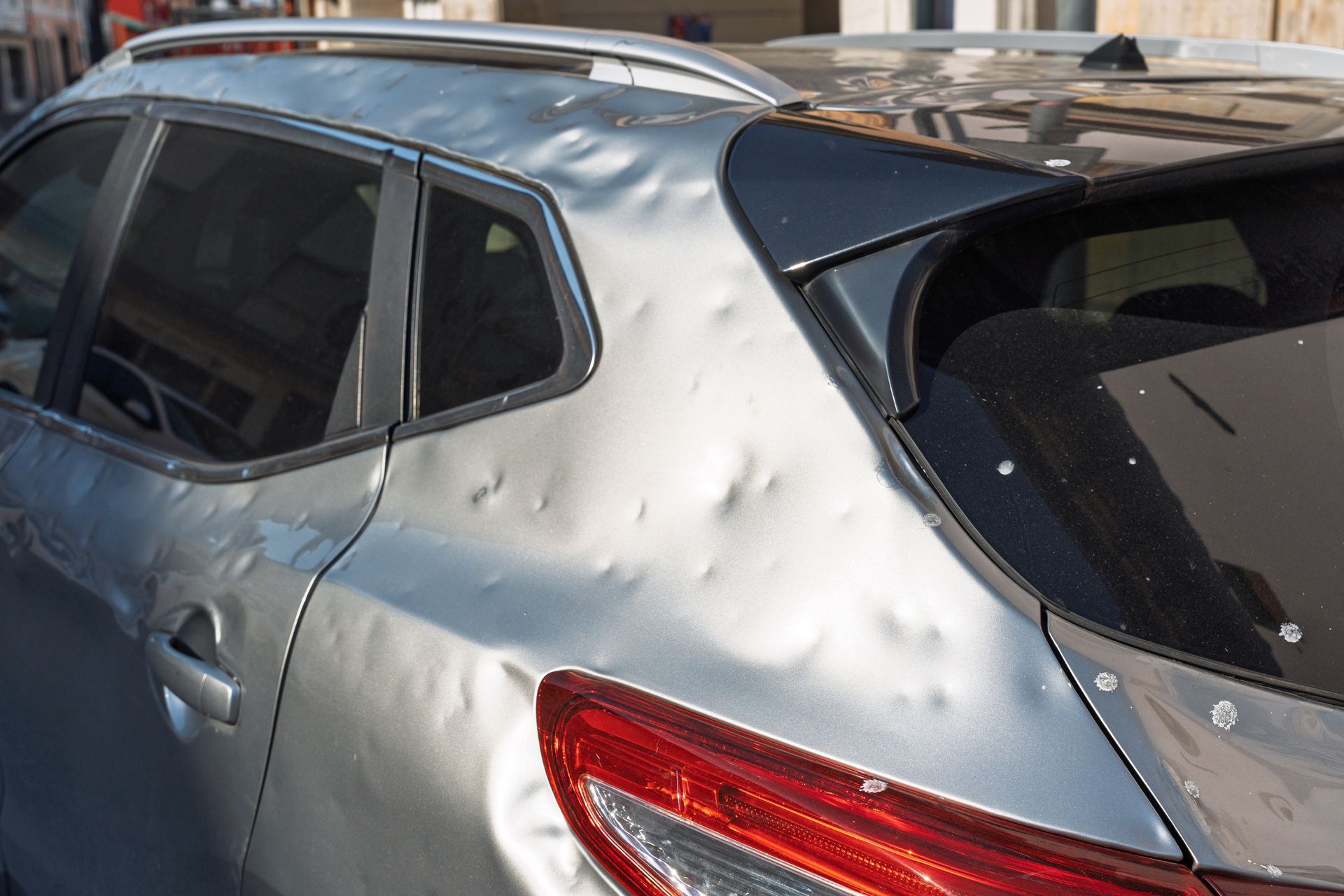
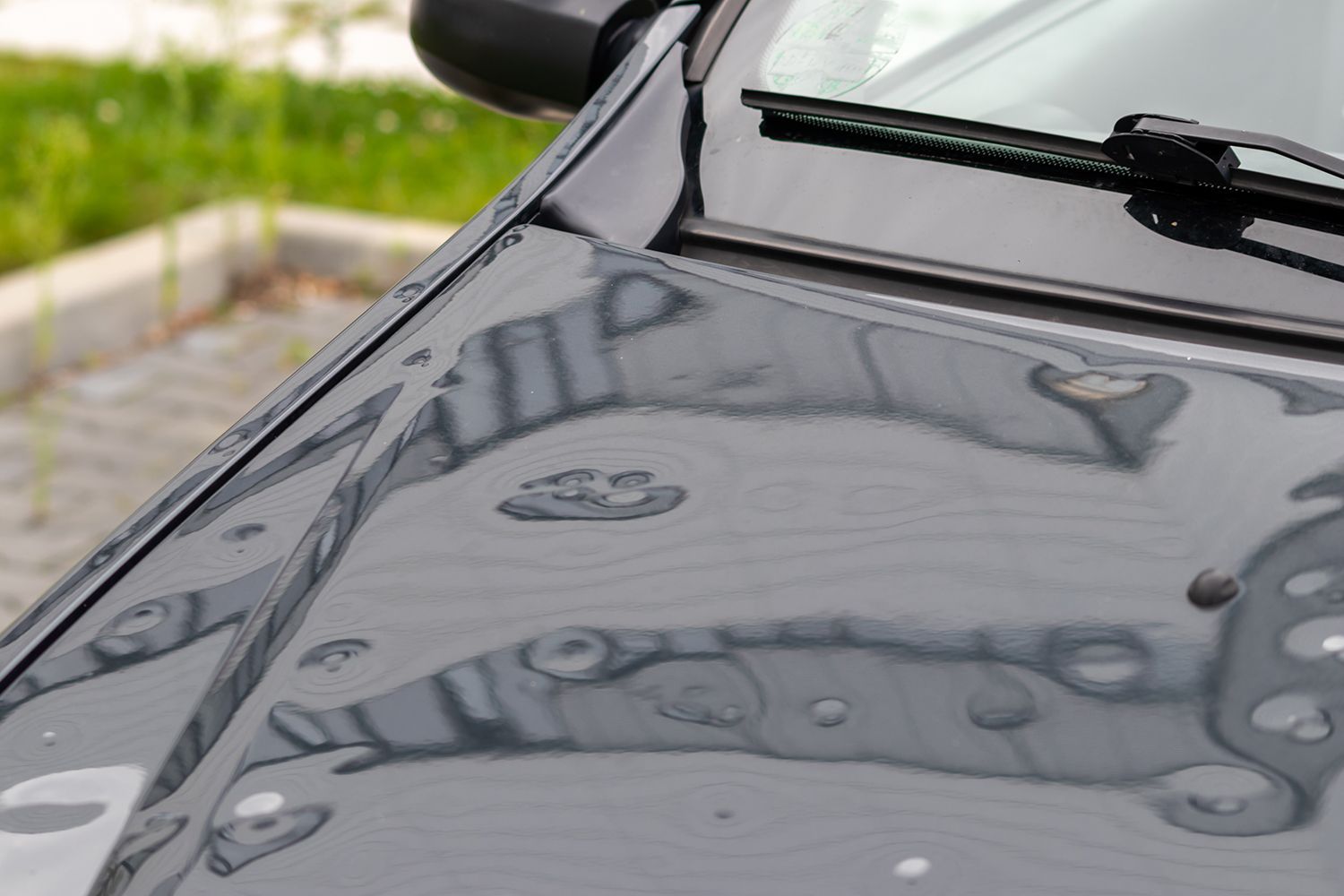
- Pea to marble-sized hail (1/4 to 1/2 inch) causes minor dents all of the hood, roof, trunk, and sides of the vehicle, even damaging door moldings and roof moldings.
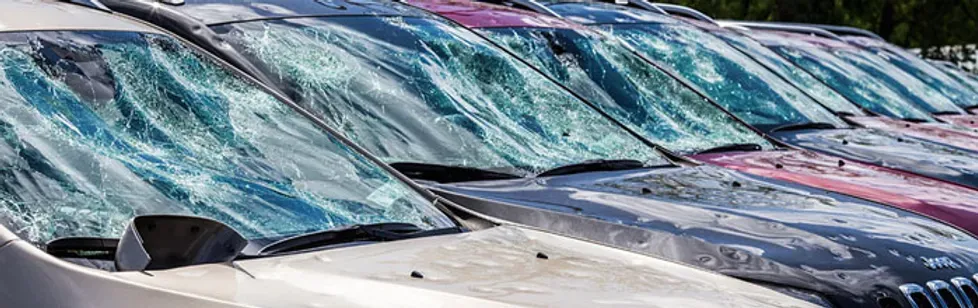
- Quarter to golf ball-sized hail (1 to 1.75 inches) can cause larger/deeper dents on all panels of your vehicle, crack windshield glass, and even damage your windshield cowl. With high winds, this size of damage could even cause paint damage on vehicles.
- Golf ball to softball-sized hail can strike at 70 to 120 mph, often causing severe body damage and broken windshields, sunroofs, and mirrors.
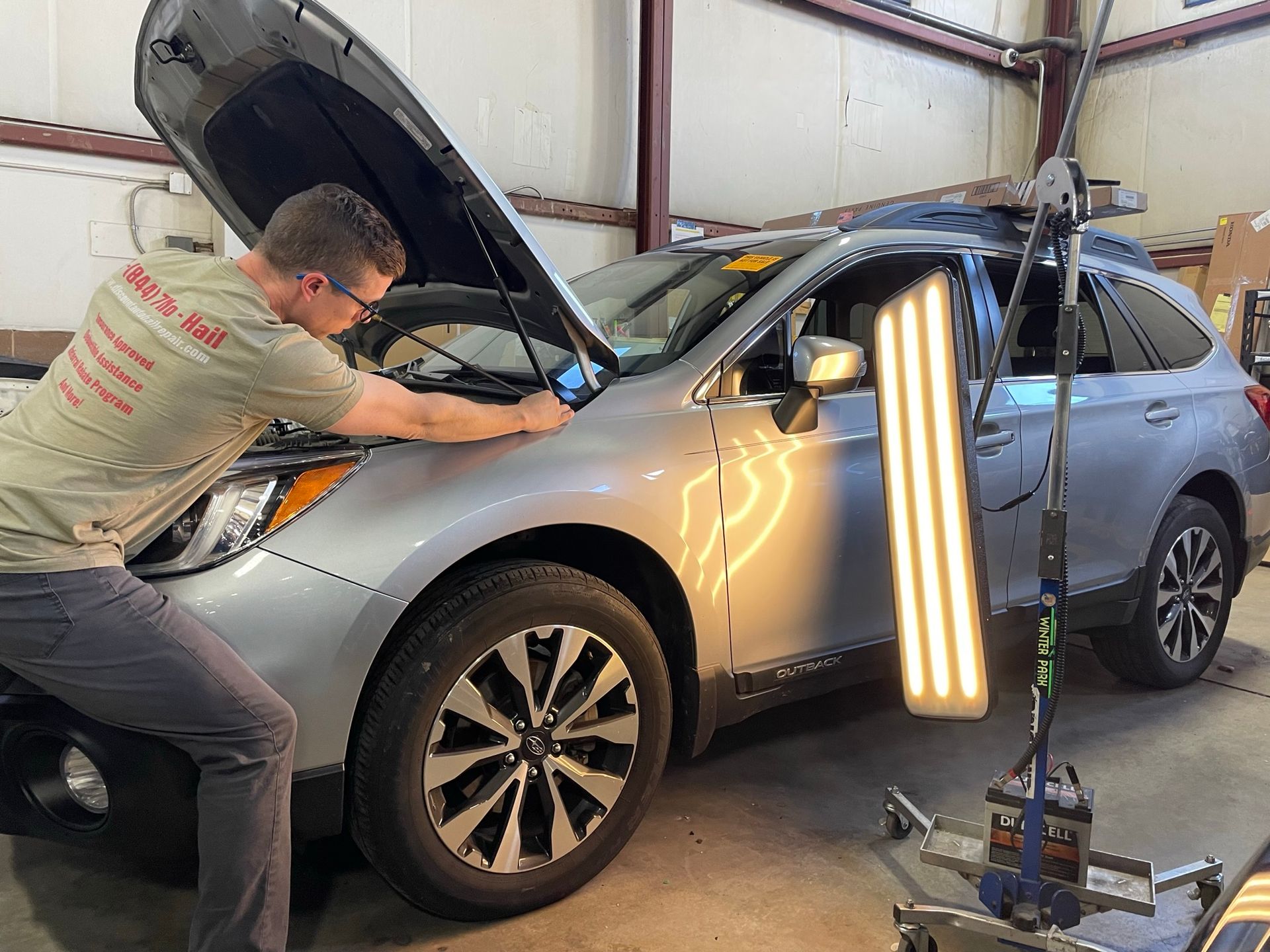
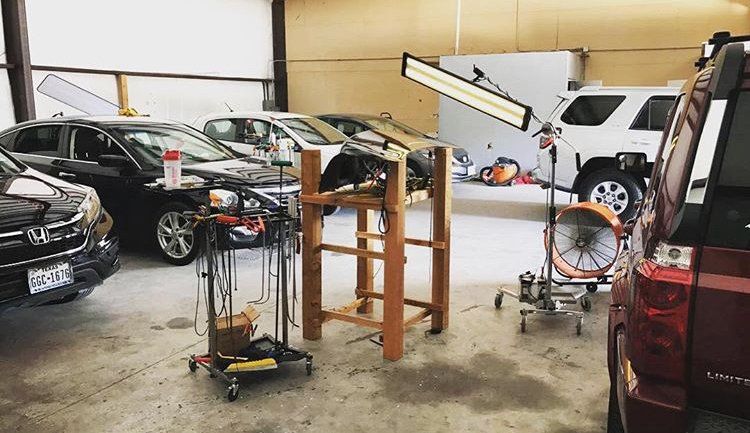
Smaller dents can go unnoticed after a storm and only become visible later under different lighting. The critical variable isn't just size. It's the combination of dent depth and density across your vehicle. A hood with dozens of shallow dents spaced evenly across the surface may be a strong candidate for paintless dent repair (PDR), a technique that restores the metal from behind the panel without any fillers, sanding, or repainting. A panel with fewer but deeper impacts, especially where the paint has cracked or flaked, may require more traditional bodywork.
This is exactly why a professional damage assessment matters before you assume anything about your repair path.
Steps to Take Right After a Denver Hailstorm
Prompt action after a storm can protect both your vehicle and your insurance claim:
- If possible, take a video or photo while the storm is happening from a safe place indoors. If you can’t take photos or a video during the storm, go outside when it is safe to do so and take photos showing the hail stones on the ground. This gives both you and your insurance a date and timestamp for the storm and helps remind you of the exact date and time it happened if you need help remembering later.
- Once the storm has passed and it is safe to go outside, take photos of your vehicle where it was parked during the storm. We recommend taking photos of the 4 corners of your vehicle and making sure your location is turned ON for the photos, so you have an additional date/time stamp and a GEO-location for both yourself and your insurance records.
- If you have any noticeable damage, such as to your windshield, mirrors, moldings, or plastics, or larger dents that are easily visible, you will want to go ahead and take a photo of those items as well.
- Contact your insurance provider to ask about the Comprehensive Coverage on your policy. If damage is obvious, you may want to go ahead and open a claim. But whether you decide to proceed with a claim at the time you call, you will want to make sure to ask the following questions
- Do I have comprehensive coverage on my policy?
- What is my comprehensive deductible amount?
- Do I have car rental coverage on my policy?
- What are my Car rental coverage amounts?
- PRO TIP: When you call to ask these questions, remember that if you decide to make any changes to your policy coverages, those changes will not apply to the storm you just endured and will only be applied to subsequent storms or claims, as your policy coverages are up to the date/time you make the change. Insurance companies will not adjust or backdate coverage details after a hailstorm has already occurred.
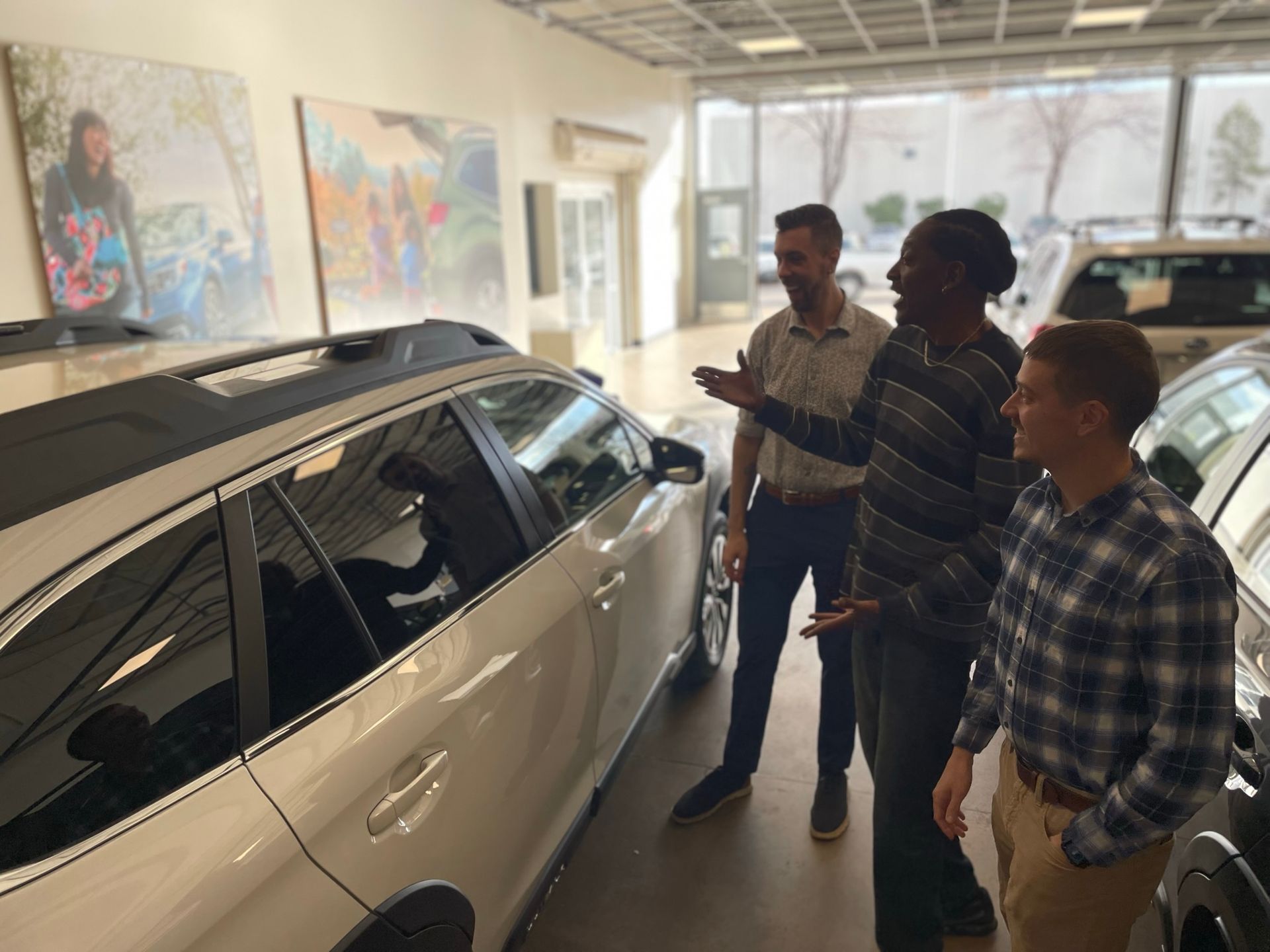
- Choose an established local hail damage repair shop with verifiable reviews rather than out-of-town operators who appear after major storms to book an appointment for an inspection. If you are not sure if your damage is claim-worthy, or if you are unsure how severe the hail damage to your car really is, you can wait to file your insurance claim until after you speak to your chosen shop. A good shop can tell you whether it makes sense to file a claim and guide you through the process.
- Keep all documentation, photos, and receipts organized for your insurance adjuster. Documents may include Invoices, photos, and check-in inspection photos from shops.
Does Comprehensive Auto Insurance Cover Hail?
Comprehensive auto insurance typically covers hail damage. If your policy includes comprehensive coverage, repairs may be covered minus your deductible. Review your policy before storm season rather than after a storm hits, and make any necessary adjustments to your coverage details ASAP.
Get Your Vehicle Assessed and Repaired in Denver
Denver-Based Elevate Hail & Dent Repair proudly serves Denver, CO, and surrounding communities, offering paintless dent repair, hail damage restoration, and insurance claim assistance. If you are looking to book a free inspection, call
844-766-4245 to schedule a no-obligation consultation. You can also
learn more about their hail damage restoration services or
get in touch through their contact page to book an appointment. For reviews and location details, visit
Elevate Hail & Dent Repair on Google.